

Adam Brazier joined the Cornell Center for Advanced Computing in 2014 and is a member of the Consulting Group. He has been working in research at Cornell since 2005, first as a Research Associate in the Astronomy Department, and then as an Astronomy Programmer at the National Astronomy and Ionosphere Center and latterly Science Software Architect for the CCAT Telescope project. With a focus on the computational and data-intensive aspects of research at all stages of the research life cycle, Adam is a member of the international North American Nanohertz Observatory for Gravitational Waves (NANOGrav) and the PALFA pulsar survey collaboration.

Data Science With SQL
and TableauCornell Certificate Program
Data Science With SQL and Tableau (CACC03)
Enroll Now
Online
$3,900
Request More Info
More Info
Overview and Courses
Proficiency in structured query language (SQL) is fundamental for anyone working with data. Used in organizations large and small, learning SQL will prepare you to quickly query raw data and transform it into meaningful visualizations using tools like Tableau to help you make business decisions.
This certificate program is designed to help you analyze data in a relational database and develop your understanding of the relationship between SQL and data visualizations. You will use SQL and fundamental database concepts to create a normalized database, manipulate the data within the database, and extract the data from the database, discovering how to convert business questions into SQL queries that extract answers from your data.
After developing your skills working with databases, you will take raw data and create data visualizations using Tableau. You’ll explore a wide variety of charts and learn how to select the best chart to convey the meaning in your data. This combination of being able to both work with and present data to key stakeholders will prepare you to bring value to any data-centric organization.
You will be most successful in this program if you have an understanding of basic statistical concepts.
System requirements: To complete this course, you will need to install Tableau Desktop Public on your local device. While this software is free, you will need to create an online Tableau Public account to download the Tableau Desktop Public package. You will also need administrative privileges to install this software on your device.
Refer to Tableau's System Requirements for up-to-date information on supported devices to check your device compatibility.
This program includes a year of free access to Symposium! These events feature several days of live, highly participatory virtual Zoom sessions with Cornell faculty and experts to explore the Data Science industry’s most pressing topics. Symposium events are held several times throughout the year. Once enrolled in your program, you will receive information about upcoming events.
Throughout the year, you may participate in as many sessions as you wish. Attending Symposium sessions is not required to successfully complete the certificate program.
Course list
Data drives many real-world endeavors, which means that storing and accessing the data is foundational to success. Relational databases are an industry-standard data storage mechanism for maintaining data integrity while allowing flexible data retrieval.
You will begin this course by examining the basic table structures that form a relational database. Using the relational database format, you will define connections between your data fields and determine how those can be expressed. You will then practice normalizing a relational database to ensure data integrity and reduce redundancy. As this course concludes, you will use a relational database system called OmniDB along with structured query language (SQL) to retrieve specific information from the database.
View Course Start Dates Hide Course Start Dates
View Course Details- Oct 28, 2026
- Nov 25, 2026
- Dec 9, 2026
- Dec 23, 2026
- Jan 6, 2027
- Jan 20, 2027
- Feb 3, 2027
Relational databases are workhorses which form the backbone for much of the information we find at our fingertips on the internet. In this course, you will learn to create and modify databases using OmniDB and structured query language (SQL) to import data, create tables, and modify fields. You will also practice cleaning data to maintain your database and ensure that it provides accurate information. As the course progresses, you will identify questions you want answered and practice translating those questions into SQL. You will also examine different forms of outputting data from a database, including outputting to a program or text file and outputting CSV text.
You are required to have completed the following course or have equivalent experience before taking this course:
- Querying Relational Databases
View Course Start Dates Hide Course Start Dates
View Course Details- Oct 28, 2026
- Nov 11, 2026
- Nov 25, 2026
- Dec 9, 2026
- Dec 23, 2026
- Jan 6, 2027
- Jan 20, 2027
In today's world, data fills every corner — from business to science to our daily lives. Yet large swathes of data aren't practical or parseable for humans when presented in their native formats; we rely on faster and more intuitive ways of digesting complex data. One of these methods is data visualization, or the graphical representation of data in the form of charts, graphs, and diagrams. In this course, you will encounter myriad ways to visualize data and provide your audience with a clear understanding of the data's contents.
You will explore the fundamental principles of data visualization through the lens of data types, audience analysis, and communication effectiveness. You'll categorize data and select compelling visualization methods while considering your intended audience and message objectives. You'll also gain insight into the strategic implementation of data visualization, including determining when visualization enhances communication and when alternative approaches might be more effective.
View Course Start Dates Hide Course Start Dates
View Course Details- Nov 11, 2026
- Dec 9, 2026
- Jan 6, 2027
- Feb 3, 2027
- Mar 3, 2027
- Mar 31, 2027
- Apr 28, 2027
Raw data rarely arrives in the perfect format for analysis and visualization. Before analysts can visualize meaningful insights from their data in Tableau, they must first transform their data into a structured, reliable foundation.
In this course, you will prepare and load data into Tableau to construct your first data visualizations. You'll begin by exploring Tableau's interface and reviewing the requirements for analysis-ready data. To organize your data and workspace, you'll double-check data elements for proper formatting, connect multiple datasets, and identify and resolve common data preparation issues.
You will further develop these foundational skills by constructing basic plot and chart visualizations then build on these visuals by computing additional custom values from your data, called calculated fields, to represent key business metrics. By practicing these techniques on a fictional financial dataset, you'll gain the skills to construct strong visualizations that communicate clear business insights to your audiences.
System requirements:
To complete this course, you will need to install Tableau Desktop Public on your local device. While this software is free, you'll need to create an online Tableau Public account to download the Tableau Desktop Public package. You‘ll also need administrative privileges to install this software on your device.
Refer to Tableau's System Requirements for up-to-date information on supported devices to check your device compatibility.
You are required to have completed the following course or have equivalent experience before taking this course:
- Exploring Data Visualization Techniques
View Course Start Dates Hide Course Start Dates
View Course Details- Oct 28, 2026
- Nov 25, 2026
- Dec 23, 2026
- Jan 20, 2027
- Feb 17, 2027
- Mar 17, 2027
- Apr 14, 2027
As an analyst, it's not always enough to create a visualization; sometimes, you need to weave together many elements to give your audience the whole picture. Whether it's creating an important presentation to persuade your clients or crafting a vital dashboard that enables decision making in real time, creating insightful and compelling data stories is essential to effective data visualization.
In this course, you will explore the art of combining visualizations into powerful dashboards and compelling data stories. Beginning with dashboard fundamentals, you'll identify essential components and evaluate their effectiveness for different audiences. You'll then create interactive dashboards incorporating filters, actions, and navigation elements to enhance user experience. You'll also apply styling techniques, including color schemes, spacing, and show/hide features, to improve dashboard quality and impact. Finally, you'll develop data stories that effectively communicate insights and guide audiences through complex analytical narratives.
System requirements:
To complete this course, you will need to install Tableau Desktop Public on your local device. While this software is free, you'll need to create an online Tableau Public account to download the Tableau Desktop Public package. You‘ll also need administrative privileges to install this software on your device.
Refer to Tableau's System Requirements for up-to-date information on supported devices to check your device compatibility.
You are required to have completed the following courses or have equivalent experience before taking this course:
- Exploring Data Visualization Techniques
- Creating Professional Data Visualizations
- Creating Map-Based Visualizations
- Developing Advanced Visual Analytics
View Course Start Dates Hide Course Start Dates
View Course Details- Nov 11, 2026
- Dec 9, 2026
- Jan 6, 2027
- Feb 3, 2027
- Mar 3, 2027
- Mar 31, 2027
- Apr 28, 2027
eCornell online Workshops are live, interactive learning experiences lasting 1 to 4 hours and led by Cornell faculty experts. These premium, short-format sessions focus on AI topics and are designed for busy professionals who want to gain immediately applicable skills and strategic perspectives. Workshops may include faculty presentations, breakout discussions, and guided hands-on practice.
The AI Workshops All-Access Pass provides you with unlimited participation for 6 months from your date of purchase. Whether you choose to attend one Workshop per month or several per week, the All-Access Pass allows you to customize your AI journey and stay on top of the latest AI trends.
Hosted by Cornell faculty at the forefront of their fields, Workshops cover a range of cutting-edge AI topics applicable across industries. Workshops are offered at three levels to allow you to choose topics that match your experience.
- AI Foundations
- These Workshops introduce core AI concepts, terminology, capabilities, limitations, and practical applications. No prior AI experience is required.
- Best for: Beginners, AI-curious professionals, and teams starting their AI journey.
- AI in Practice
- These Workshops focus on practical skills, workflows, and strategies that help participants use AI more effectively in their day-to-day work. Some familiarity with AI tools is recommended.
- Best for: Professionals who have experimented with AI and want to build confidence and capability.
- AI Leadership and Transformation
- These advanced Workshops explore emerging technologies, strategic implementation, governance, organizational impact, and specialized applications. AI fluency is expected, and some Workshops may have prerequisites.
- Best for: AI leaders, transformation teams, executives, and advanced practitioners.
Request more Info by completing the form below.
more Info
by completing the form below.Act today—courses are filling fast.
How It Works
Format
All Online
Time Commitment
3 months with 3 to 7 hours of study per week
Cost
$3,900
Learn From Top Minds
Courses are developed by Cornell faculty.
Power Your Career
Gain today’s most in-demand skills to stand apart.
Flexibility Fits Your Life
Learn on your schedule without stepping out of your job.
Small-class Experience
Participate in facilitated discussions and live sessions with industry peers.
Real-world Projects
Apply learnings and insights to your work to make an impact right away.
Personalized Feedback
Enjoy meaningful feedback on assignments from expert facilitators.
Format
All Online
Time Commitment
3 months with 3 to 7 hours of study per week
Cost
$3,900
Learn From Top Minds
Courses are developed by Cornell faculty.
Power Your Career
Gain today’s most in-demand skills to stand apart.
Flexibility Fits Your Life
Learn on your schedule without stepping out of your job.
Small-class Experience
Participate in facilitated discussions and live sessions with industry peers.
Real-world Projects
Apply learnings and insights to your work to make an impact right away.
Personalized Feedback
Enjoy meaningful feedback on assignments from expert facilitators.
Faculty Authors
Adam Brazier
Computational Scientist
Cornell University Center for Advanced Computing
Computational Scientist at Cornell University Center for Advanced Computing

Professor of Practice, Charles H. Dyson School of Applied Economics and Management, Cornell SC Johnson College of Business
Dr. Eric Lewis is a Professor of Practice in the SC Johnson College of Business at Cornell University. He earned his Ph.D. from Union College in Engineering Systems and holds an MBA in Accounting as well as an undergraduate degree in Finance. Before joining the Cornell faculty, Dr. Lewis held tenured positions at Skidmore College, Ithaca College (where he was Chair of the Department of Accounting and Law), and Union Graduate College, where he served as Dean of the School of Business. Dr. Lewis has published his research in many academic and professional journals, including the Journal of Legal Economics, the Journal of Business Valuation and Economic Loss Analysis, and the CPA Journal.
In addition to his work at Cornell, Dr. Lewis is the founding partner of a boutique consulting firm where he provides quantitative analysis in legal matters and also serves as an expert witness. He has been accepted as a subject-matter expert during trials in courts at the county, state, and federal levels. Dr. Lewis is a past President of the American Accounting Association’s Northeast Region and a member of the regional Accounting Hall of Fame. At Cornell, he serves as the Faculty Director for the Master of Professional Studies programs in Management and Accounting at the Samuel Curtis Johnson Graduate School of Business
Key Course Takeaways
- Write SQL queries for a relational database
- Manipulate data in a relational database using SQL
- Analyze mapping visualizations tailored to data type and audience needs
- Identify best practices for advanced visualizations considering data complexity and audience comprehension
- Prepare and format data for visualization, ensuring proper data types and date alignment in Tableau

Download Brochure
Fill out the form below to download program information and connect
with us.
Download a Brochure
Not ready to enroll but want to learn more? Download the certificate brochure to review program details.“
I like to think outside of the box, and this program from eCornell helped me conceptualize how I want to approach data problems going forward. I was able to actually apply new course concepts to my work, rather than simply repeat steps with different values.
‐ Mark T.


What You'll Earn
- Data Science With SQL and Tableau Certificate from Cornell University Center for Advanced Computing
- 62 Professional Development Hours (6.2 CEUs)
- 20 PD hours towards IIBA's core certification program OR 20 CDUS towards IIBA's recertification
Watch the Video
Tyffani Newkirk shares how eCornell’s Data Science with SQL and Tableau Certificate helped her build practical data analytics skills and gain confidence using AI and workflow automation. With flexible online learning, she was able to grow professionally while balancing work, family, and leadership responsibilities.
Who Should Enroll
- Data scientists
- Business analysts
- Developers
- Professionals who work with databases or data warehouses
- Marketing analysts
- Career starters
Frequently Asked Questions
Data teams are expected to deliver clear, trustworthy insights quickly, but that’s hard to do when you cannot reliably pull the right data from a relational database or communicate results in a way that decision makers can act on. In the Data Science With SQL and Tableau Certificate, authored by faculty from Cornell’s Center for Advanced Computing and the SC Johnson College of Business, you will build practical skill in both parts of that workflow: using SQL to query and shape data, and using Tableau and visualization best practices to present what the data means.
You will learn how relational databases are structured, why normalization matters for data integrity, and how to write SQL queries that filter, join, group, and summarize data to answer real questions. You’ll then bring those results into data visualization work, where you’ll practice choosing effective chart types for your data and audience, building professional Tableau visualizations with calculated fields and filters, and assembling dashboards and data stories that guide stakeholders through key insights.
If you want to query data with confidence, build decision-ready Tableau dashboards, and communicate insights clearly to stakeholders, you should choose Cornell’s Data Science With SQL and Tableau Certificate.
You get a structured, supported learning experience that connects database work to the way decisions actually get made on the job. Many online programs either teach SQL in isolation or focus on visualization without building a reliable data foundation. Here, you develop end-to-end capability, from designing and querying relational data to presenting it through dashboards and narrative data stories.
Cornell’s Data Science With SQL and Tableau Certificate also uses eCornell’s cohort-based learning model, where you learn alongside a small group of professionals and receive guidance from an expert facilitator. Instead of only watching videos, you practice with interactive quizzes, discussions, and multi-part course projects that mirror real analytics tasks, such as normalizing a database, writing queries that answer business questions, and building Tableau dashboards with interactivity and clear audience alignment.
Because the SQL work is grounded in relational database integrity and performance concepts like keys, indexes, normalization, and query optimization, you learn not only how to get an answer but also how to get an answer you can trust and explain. Then, in Tableau, you move past basic chart building into data preparation, calculated fields, dashboard design, and storytelling techniques that help stakeholders understand what to do next.
Enrolling in this certificate also provides you with a 6-month All-Access Pass to eCornell's live online AI Workshops, interactive sessions led by world-class Cornell faculty that combine Ivy League insight with practical applications for busy professionals. Each 3-hour Workshop features structured instruction, guided practice, and real tools to build competitive AI capabilities, plus the opportunity to connect with a global cohort of growth-oriented peers. While AI Workshops are not required, they enhance certificate programs through:
- Integrating AI perspectives across most curricula
- Responding to emerging AI developments and trends
- Offering direct engagement with Cornell faculty at the forefront of AI research
Cornell’s Data Science With SQL and Tableau Certificate is designed for professionals who want to work more effectively with data stored in relational databases and communicate insights through clear, professional visualizations and dashboards.
The Data Science With SQL and Tableau Certificate is a strong fit if you are:
- A business analyst, data analyst, or marketing analyst who needs to query data directly and deliver reporting that leaders can use
- A developer or data professional who wants stronger fundamentals in relational database design, normalization, and practical SQL querying
- A data scientist or analytics-minded professional who wants a clearer bridge between SQL outputs and Tableau-based visualization and storytelling
- A career starter who wants a structured way to build job-relevant skills in SQL and data visualization
You will be most successful if you already understand basic statistical concepts, and you should be prepared to install Tableau Desktop Public and create a Tableau Public account to complete the Tableau-based courses.
You will complete hands-on, multi-part projects that mirror how analysts work, from building and querying a database to producing Tableau visuals, dashboards, and a narrative story.
Examples of projects and practice tasks in Cornell’s Data Science With SQL and Tableau Certificate include:
- Writing and refining SQL queries in an embedded OmniDB practice environment, including SELECT queries, filters with WHERE, multi-table JOINs, aggregation with GROUP BY and HAVING, and subqueries
- Creating and modifying a relational database with SQL by defining tables, data types, primary and foreign keys, and indexes, then loading, updating, and cleaning data so it meets constraints
- Translating natural language business questions into accurate SQL queries, then validating results and considering performance trade-offs like indexing and query structure
- Critiquing and selecting visualization types based on your data, your message, and your audience, including both foundational charts and more sophisticated options
- Preparing and connecting data in Tableau, troubleshooting common data formatting and join issues, and building professional visualizations with filters and calculated fields that represent key business metrics
- Building interactive Tableau dashboards using layout best practices and interactivity (such as actions), then polishing design choices like color, spacing, and consistency
- Creating a Tableau story that sequences insights for a specific audience so stakeholders can follow the narrative from context to conclusion
Across the certificate, you practice producing work products you can adapt to your own reporting and analytics responsibilities while following guidance to obscure or avoid sharing sensitive data when applicable.
Cornell’s Data Science With SQL and Tableau Certificate equips you to turn raw relational data into decision-ready insights by combining practical SQL querying skills with Tableau visualization, dashboarding, and data storytelling.
After completing the Data Science With SQL and Tableau Certificate, you will have the skills to:
- Write SQL queries for a relational database
- Manipulate data in a relational database using SQL
- Analyze mapping visualizations tailored to data type and audience needs
- Identify best practices for advanced visualizations considering data complexity and audience comprehension
- Prepare and format data for visualization, ensuring proper data types and date alignment in Tableau
Learners frequently describe this program as a fast, practical way to build job-ready analytics skills, especially in SQL, Tableau, and data visualization. They often highlight hands-on SQL practice in an embedded database environment, a clear progression from fundamentals to more advanced querying and data relationships, and Tableau-based work that goes beyond chart building to emphasize audience, clarity, and storytelling. Learners also mention applied, workplace-relevant projects; short modular lessons; quizzes and exercises that reinforce learning; and responsive facilitators and live support opportunities. Overall, many report using what they learn immediately to improve how they work with databases, reporting, and decision making in their roles.
What truly sets eCornell apart is how our programs unlock genuine career transformation. Learners earn promotions to senior positions, enjoy meaningful salary growth, build valuable professional networks, and navigate successful career transitions.
The Data Science With SQL and Tableau Certificate, which consists of 5 short courses, is designed to be completed in 3 months. Each course in this certificate runs for 2 weeks.
Most learners should plan for a weekly time commitment in the range of about 3 to 7 hours, depending on the course and your familiarity with the topics. The SQL courses are designed for steady practice, with Tableau courses that include hands-on building.
In practice, the schedule is flexible because much of the work is asynchronous, meaning you can complete readings, videos, exercises, and projects on your own time during each course window. At the same time, the experience is structured with deadlines and facilitated discussions so you keep momentum and can learn alongside your cohort.
Students often describe Cornell’s Data Science With SQL and Tableau Certificate as a fast, practical way to build job-ready analytics skills, especially in SQL, Tableau, and data visualization. They frequently mention that the learning experience helps them move from understanding concepts to confidently applying them on real datasets, with a format that fits around full-time work.
Learners commonly highlight outcomes such as:
- Hands-on SQL practice in an embedded database environment to write and test queries quickly
- A clear progression from SQL fundamentals to more advanced querying and data relationships
- Data visualization skills that go beyond chart building to emphasize audience, clarity, and storytelling
- Tableau-based work that focuses on building dashboards and communicating insights
- Applied projects that mirror workplace tasks and reinforce learning through real scenarios
- Short lessons that make dense topics easier to absorb and retain
- Quizzes, exercises, and discussion activities that help cement new skills
- Flexible pacing that supports busy professionals while still providing structure and deadlines
- Responsive facilitators who provide guidance, feedback, and live support opportunities
- An intuitive online platform that makes it easy to stay organized and keep moving forward
Overall, students say they finish the program with a stronger ability to query, analyze, and present data, and many report using what they learned immediately to improve how they work with databases, reporting, and decision making in their roles.
You do not need prior programming experience, but you should be ready to practice regularly and think logically about how data is structured and retrieved.
In the Querying Relational Databases course, you build core foundations in relational databases and SQL, including tables and keys, normalization, and writing queries with SELECT, WHERE, JOIN, GROUP BY, and subqueries. In the Working with Data Using SQL course, you go further into creating and modifying databases and tables, loading and cleaning data, and translating real questions into SQL queries.
If you have worked with spreadsheets or reporting tools before, that can help, but Cornell’s Data Science With SQL and Tableau Certificate is designed to teach SQL from the ground up through guided examples, quizzes, and hands-on assignments in a practice environment.
In Cornell’s Data Science With SQL and Tableau Certificate, you will practice SQL in OmniDB, a browser-based environment used in the coursework so you can run queries, switch databases, and test solutions as you learn.
The SQL instruction focuses on widely used relational database concepts and a portable subset of ANSI SQL, so the query skills you practice, such as joins, filtering, grouping, and subqueries, are designed to translate to common relational database systems. The coursework also introduces practical considerations like indexes, foreign keys, and performance trade-offs when queries scale.
To complete the Tableau courses, you will need to install Tableau Desktop Public on your local device. The software is free, but you will need a Tableau Public account to download it, and you will need administrative privileges on your device to install applications.
Because Tableau Desktop Public runs on your computer, it is also important to confirm your device compatibility using Tableau’s published system requirements before you start.
Explore Related Programs















Explore programs to meet your professional goals
Certificates

Earn a Cornell credential as you complete multiple courses.
- 2 to 6 months
- $2,000 to $10,000
- Online
Courses

Learn in a small cohort, with graded assignments and opportunities for live sessions.
- 2 to 4 weeks
- $299 to $1,199
- Online
Workshops

Develop AI skills and strategies in interactive sessions with Cornell faculty.
- 3 hours
- $449
- Online
Degrees

Earn a professional master’s degree from Cornell University.
- 15 to 24 months part-time
- Tuition varies
- In person or online
On Campus
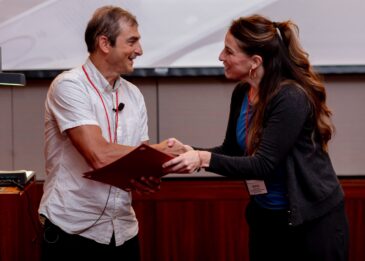
Join us in Ithaca or NYC to engage with peers and experts from around the world.
- 2 to 5 days
- $3,000 to $10,000
- In person - Ithaca or NYC
Programs for Teams
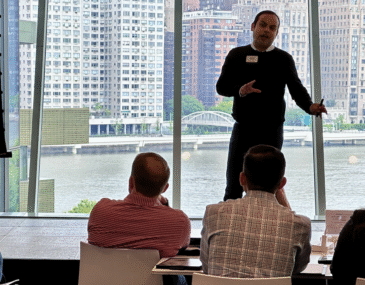
Address strategic challenges with Cornell University faculty to develop the skills required for organizational success.
- Custom Enterprise Programs
- Price varies
- In person or hybrid
Request Information Now by completing the form below.
Act today—courses are filling fast.
Purchase Options
3900

Data Science With SQL and Tableau
| Select Payment Method | Cost |
|---|---|
| $3,900 | |
Review Program Pricing and Details