
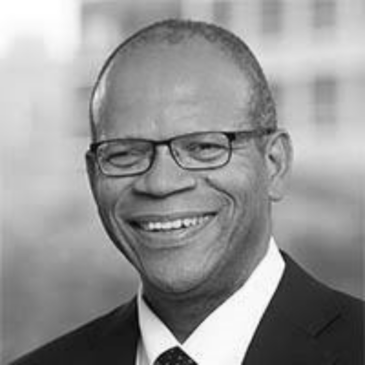
Leonard J.Kennedy has more than 35 years of experience advising clients and senior federal government policymakers on telecommunications and media law; regulatory strategy; and policy and investment matters affecting wireless, wired, and internet services and networks. Retired from the corporate world, Professor Kennedy now works as a senior consultant to organizations seeking expertise on their privacy strategy. He previously served as Senior Advisor at Neustar, Inc., where he counseled senior leadership, including the CEO, and other clients in connection with business, legal, regulatory, and other matters. Prior to that, Professor Kennedy was Neustar’s Chief Legal Officer, External Affairs head, and Corporate Secretary. He advised the Board of Directors, CEO, and senior management, and oversaw the compliance and the legal functions of the company.
Previously, Professor Kennedy served as the founding Associate Director, General Counsel, and Senior Advisor to the Director of the U.S. Consumer Financial Protection Bureau, where he built the Office of General Counsel. Prior to joining the CFPB, he served as Senior Vice President and General Counsel, Corporate Secretary, and Chief Government Affairs Officer of Sprint, overseeing the legal and regulatory completion of its $35 billion merger with Nextel. Professor Kennedy was also a partner at the law firm of Dow, Lohnes & Albertson, where he advised providers of cable, wireless, information, and telecommunications services. He also served as senior legal advisor to two Commissioners of the Federal Communications Commission, among other roles during his tenure at the agency.
Professor Kennedy received the Corporate Board’s America’s Top General Counsel Award in 2008. He has published law review articles on communications law and consumer financial regulation and spoken widely on these topics.
Professor Kennedy received his B.A. degree in Economics from Cornell University in 1974 and his J.D. from Cornell Law School in 1977.