
Chris Anderson is a professor at the Cornell Nolan School of Hotel Administration. Prior to his appointment in 2006, he was on the faculty at the Ivey School of Business in London, Ontario, Canada. Professor Anderson’s main research focus is on revenue management and service pricing. He actively works in the application and development of revenue management across numerous industry types, including hotels, airlines, and rental car and tour companies, as well as numerous consumer packaged goods and financial services firms. Professor Anderson’s research has been funded by numerous governmental agencies and industrial partners. He serves on the editorial board of the Journal of Revenue and Pricing Management and is the regional editor for the International Journal of Revenue Management. At the Nolan School of Hotel Administration, Professor Anderson teaches courses in revenue management and service operations management.

Restaurant Distribution StrategyCornell Certificate Program
Request More Info
Overview and Courses
Changing consumer expectations and rapid advancements in digital technology are redefining how restaurants connect with guests and deliver their offerings. As new distribution models, including online ordering and delivery platforms to ghost kitchens, subscriptions, and consumer packaged goods, reshape the industry, restaurant operators face both exciting opportunities and complex decisions about expanding their reach and strengthening their brands.
Throughout this program, you will analyze evolving restaurant-customer interactions and assess the impact of emerging digital tools, such as online reservation systems and user-generated review sites. You’ll evaluate the business potential of diverse distribution channels and determine how each aligns with your unique operational and strategic goals. By exploring the influence of menu design and floor plan layout on new distribution strategies, you’ll uncover ways to optimize both customer experience and operational efficiency. The program also guides you in leveraging these innovations to foster customer loyalty and long-term business growth.
By completing this certificate, you will be equipped to critically evaluate, implement, and manage new distribution strategies that enhance your restaurant’s competitiveness in a dynamic marketplace.
You’ll have six months to complete the required elements for this certificate program, but this flexible approach allows you to finish sooner based on your schedule.
We are witnessing a revolution in the restaurant industry, with accelerated innovation and the adoption of digital platforms and applications.
Accessing your restaurant from the palm of their hand is more than just a nice-to-have convenience for your customer; it is an avenue for your restaurant to access new and exciting opportunities that will help you improve the customer experience, increase operational efficiency, reduce costs, unlock new customer segments, and become a leader in your local market. Yet these opportunities are not free, and their costs must be evaluated and weighed so that you can mitigate risks and maximize your potential. As a restaurateur, it is critical that you understand the evolving landscape and are equipped with the skills to adapt to changing expectations as well as the ability to efficiently evaluate arising opportunities.
In this course, you will analyze restaurant distribution innovations and assess their potential impact on your business. You’ll then evaluate digital opportunities to help your restaurant drive high-yielding direct business.
The restaurant industry is a complex and constantly evolving field that requires a knowledge of current trends, consumer behavior, and industry players. With the reliance on digital technology and consumer demand for convenience, adding a distribution channel to meet changing customer expectations has become a critical concern for many restaurant operators.
Distribution channels broadly describe how a product gets from the operation or producer to the consumer. The most common distribution formats for restaurants have traditionally been takeout, delivery, and catering, but the rise of digital technologies has expanded these models and even added others, like ghost and virtual kitchens. Faced with this kind of variety, operators need to critically consider whether or not to adopt a given distribution channel into their business strategy and understand how that format will impact its operational and strategic goals.
In this course, you will explore the strategic considerations an operator needs to be aware of before adopting a new distribution strategy, including how that format fits into the existing brand and its long-term goals. You’ll outline the target customer base for an operation and consider how trends impact customer engagement.
You will then consider and discuss how a shift in distribution strategy impacted the brand value, perception, and customer satisfaction of a particular operation. Finally, you’ll analyze a distribution channel and its business fit for a specific operation. By the end of the course, you’ll have experience evaluating a distribution strategy’s fit for both the operation and the overall brand.
There are a host of distribution channels and strategies to choose from for any restaurant ready to expand. In addition to business fit, a key factor in deciding which channel to adopt is operational fit. Operators need to be able to assess how any expansion effort will impact the day-to-day workflow of the operation, from the existing menu and inventory to the capability of the kitchen and staff.
In this course, you will explore the operational opportunities and costs of adopting a new distribution strategy, including how that addition fits with the operation’s guest promise, capacity of equipment and staff, and purchasing capabilities. You’ll analyze a menu and determine its suitability for distribution. You’ll then break down a single menu item to explore what goes into making it, from the ingredients to the purchasing options to the possible customizations guests could request. You’ill also do a root-cause analysis of inefficiencies you observe in an operation.
Finally, you will assess a floor plan and recommend an appropriate distribution strategy for the space that considers the building’s location and other tenets, as well as the guest promise made by the existing restaurant. By the end of the course, you will have experience evaluating a distribution strategy’s fit for both the operation and the overall brand, and you’ll be able to offer recommendations for how to add a distribution strategy without compromising the guest promise.
Loyal repeat customers are key to the success of any food and beverage operation. They represent recurring revenue and are a great source for feedback and gauging customer sentiment. They can also be your greatest evangelists, recommending you to friends and colleagues, even giving favorable online reviews.
Through careful design, meticulous attention to service processes, and a way to gauge customer sentiment, you can play to your team’s strengths and identify opportunities for improving the guest experience to grow your business.
Symposium sessions feature two days of live, highly interactive virtual Zoom sessions that will explore today’s most pressing topics. The Hospitality Symposium offers you a unique opportunity to engage in real-time conversations with peers and experts from the Cornell community and beyond. Using the context of your own experiences, you will take part in reflections and small-group discussions to build on the skills and knowledge you have gained from your courses.
Join us for the next Symposium, in which we’ll discuss how both day-to-day operations and strategic goal setting in the hospitality sector have rapidly evolved over the past two years, opening up new space for real-time conversations about the future of the industry. You will support your coursework by applying your knowledge and experiences to various areas of the industry, examining the innovations and accommodations you have all had to make throughout the COVID-19 pandemic and strategizing on future directions. By participating in relevant and engaging discussions, you will discover a variety of perspectives and build connections with your fellow participants from across the industry.
All sessions are held on Zoom.
Future dates are subject to change. You may participate in as many sessions as you wish. Attending Symposium sessions is not required to successfully complete any certificate program. Once enrolled in your courses, you will receive information about upcoming events. Accessibility accommodations will be available upon request.
eCornell Online Workshops are live, interactive 3-hour learning experiences led by Cornell faculty experts. These premium short-format sessions focus on AI topics and are designed for busy professionals who want to gain immediately applicable skills and strategic perspectives. Workshops include faculty presentations, breakout discussions, guided hands-on practice, and downloadable resources.
The AI Workshops All-Access Pass provides you with unlimited participation for 6 months from your date of purchase. Whether you choose to attend one workshop per month, or several per week, the All-Access Pass will allow you to customize your AI journey and stay on top of the latest AI trends.
Workshops cover a range of cutting-edge AI topics applicable across industries, hosted by Cornell faculty at the forefront of their fields. Whether you are just getting started with AI, seeking to build your AI skillset, or exploring advanced applications of AI, Workshops will provide you with an action-oriented learning experience for immediate application in your career. Sample Workshops include:
- Work Smarter with AI Agents: Individual and Team Effectiveness
- Leading AI Transformation: Bigger Than You Imagine, Harder Than You Expect
- Using AI at Work: Practical Choices and Better Results
- Search & Discoverability in the Era of AI
- Don’t Just Prompt AI – Govern it
- AI-Powered Product Manager
- Leverage AI and Human Connection to Lead through Uncertainty
Request more Info by completing the form below.
How It Works
apply Learning And Insights To Your Work To Make An Impact Right Away.
apply Learning And Insights To Your Work To Make An Impact Right Away.
- View slide #1
- View slide #2
- View slide #3
- View slide #4
- View slide #5
- View slide #6
- View slide #7
- View slide #8
- View slide #9
Faculty Authors
- Military to Business in Project Management
- Military to Business in Marketing
- AI in Hospitality
- Restaurant Distribution Strategy
- General Managers Program
- Data Analytics in R
- Management 360
- Data Analytics 360
- Revenue Management 360
- Data Analytics
- Hospitality Management
- Advanced Hospitality Revenue Management: Pricing and Demand Strategies
Lilly Jan is a lecturer of food and beverage at Cornell’s School of Hotel Administration. She brings nearly 15 years of experience in hospitality and foodservice, having worked in restaurants, catering and events, retail, and television production. Prior to joining Cornell, Dr. Jan was the Director of Culinary Operations for Newbury College in Brookline, Massachusetts. She also served as a faculty member and academic advisor at Newbury College, creating and teaching a range of classes across culinary and hospitality management. Dr, Jan has also taught for Le Cordon Bleu and Boston University.
As a chef, product and recipe developer, and foodservice consultant, Dr. Jan has worked with a variety of food-based businesses, including a food truck, on-demand food delivery, food startup, and retail food stores. She specializes in operations management, focusing on ushering food business concepts to market.
A frequent speaker and media contact on food culture, cooking, and Chinese cuisine, Dr. Jan has been featured in print and radio outlets. She worked on TV production for America’s Test Kitchen and was a regular contributor for WGBH’s Boston Public Radio.
Dr. Jan is a two-time graduate of Boston University in Communications (B.Sc.) and Gastronomy (MLA). She earned her Ph.D. from Iowa State University in hospitality management with a focus on food allergy knowledge and training in ethnic restaurants. Dr. Jan’s research interests include workplace training and education in foodservice, career progression in foodservice, food safety and food allergy in restaurants, and culture and cuisine.
Alex Susskind is a Professor of Food and Beverage Management and is currently serving as the Associate Dean for Academic Affairs. Professor Susskind earned his Ph.D. in Communication from Michigan State University with a specialization in organizational communication and his MBA with a concentration in personnel and human relations. He earned his undergraduate degree at Purdue University in Restaurant, Hotel, and Institutional Management and is also a trained chef with a degree in Culinary Arts from The Culinary Institute of America in Hyde Park, New York. Prior to starting his career in academia, Professor Susskind was a chef and restaurant operator for both independent and multi-unit restaurant companies in the Northeastern and Southeastern United States.

Chris Anderson is a professor at the Cornell Nolan School of Hotel Administration. Prior to his appointment in 2006, he was on the faculty at the Ivey School of Business in London, Ontario, Canada. Professor Anderson’s main research focus is on revenue management and service pricing. He actively works in the application and development of revenue management across numerous industry types, including hotels, airlines, and rental car and tour companies, as well as numerous consumer packaged goods and financial services firms. Professor Anderson’s research has been funded by numerous governmental agencies and industrial partners. He serves on the editorial board of the Journal of Revenue and Pricing Management and is the regional editor for the International Journal of Revenue Management. At the Nolan School of Hotel Administration, Professor Anderson teaches courses in revenue management and service operations management.
- Military to Business in Project Management
- Military to Business in Marketing
- AI in Hospitality
- Restaurant Distribution Strategy
- General Managers Program
- Data Analytics in R
- Management 360
- Data Analytics 360
- Revenue Management 360
- Data Analytics
- Hospitality Management
- Advanced Hospitality Revenue Management: Pricing and Demand Strategies
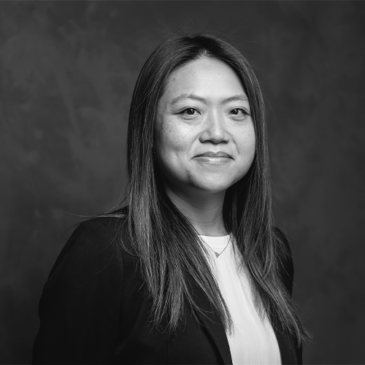
Lilly Jan is a lecturer of food and beverage at Cornell’s School of Hotel Administration. She brings nearly 15 years of experience in hospitality and foodservice, having worked in restaurants, catering and events, retail, and television production. Prior to joining Cornell, Dr. Jan was the Director of Culinary Operations for Newbury College in Brookline, Massachusetts. She also served as a faculty member and academic advisor at Newbury College, creating and teaching a range of classes across culinary and hospitality management. Dr, Jan has also taught for Le Cordon Bleu and Boston University.
As a chef, product and recipe developer, and foodservice consultant, Dr. Jan has worked with a variety of food-based businesses, including a food truck, on-demand food delivery, food startup, and retail food stores. She specializes in operations management, focusing on ushering food business concepts to market.
A frequent speaker and media contact on food culture, cooking, and Chinese cuisine, Dr. Jan has been featured in print and radio outlets. She worked on TV production for America’s Test Kitchen and was a regular contributor for WGBH’s Boston Public Radio.
Dr. Jan is a two-time graduate of Boston University in Communications (B.Sc.) and Gastronomy (MLA). She earned her Ph.D. from Iowa State University in hospitality management with a focus on food allergy knowledge and training in ethnic restaurants. Dr. Jan’s research interests include workplace training and education in foodservice, career progression in foodservice, food safety and food allergy in restaurants, and culture and cuisine.

Alex Susskind is a Professor of Food and Beverage Management and is currently serving as the Associate Dean for Academic Affairs. Professor Susskind earned his Ph.D. in Communication from Michigan State University with a specialization in organizational communication and his MBA with a concentration in personnel and human relations. He earned his undergraduate degree at Purdue University in Restaurant, Hotel, and Institutional Management and is also a trained chef with a degree in Culinary Arts from The Culinary Institute of America in Hyde Park, New York. Prior to starting his career in academia, Professor Susskind was a chef and restaurant operator for both independent and multi-unit restaurant companies in the Northeastern and Southeastern United States.
- View slide #1
- View slide #2
- View slide #3
Key Course Takeaways
- Analyze modern restaurant-customer interaction innovations to determine their impact on your business
- Evaluate digital opportunities to drive high-yield, direct business
- Assess distribution formats to find the right business fit for an operation
- Explore the operational opportunities and costs of adopting a new distribution strategy

Download a Brochure
Not ready to enroll but want to learn more? Download the certificate brochure to review program details.
What You'll Earn
- Restaurant Distribution Strategy Certificate from Cornell’s Nolan School of Hotel Administration
- 40 Professional Development Hours (4 CEUs)
Watch the Video
Who Should Enroll
- Restaurant operators and managers
- Restaurant and hotel franchisees and franchisors
- Managers of hotels with full-service restaurants or grab-and-go offerings
- Analysts at large foodservice chain organizations
- Grocery store and CPG managers
{Anytime, anywhere.}
Request Information Now by completing the form below.

$2,999
Restaurant Distribution Strategy
| Select Payment Method | Cost |
|---|---|
| $2,999 |