
This course introduces you to policy and data science surrounding income inequality and intergenerational mobility in the United States. You will begin with an in-depth background on sociology, demography, and economics, along with an introduction to “big data” and how it can be used in these fields of study to address complex policy problems. You’ll also explore essential functions in data science and the language of R before moving on to more complex statistics and data structures that will assist you in articulating big data.

You will then investigate income inequality utilizing the Opportunity Atlas data project to examine geographic differences in intergenerational income mobility. Finally, you’ll further study this mobility across race, ethnicity, and gender, and you’ll engage in several opportunities to practice your new skill set in R, data, and policy analysis.

In this course, you will explore the data surrounding racial and ethnic inequalities in the United States, particularly in the areas of educational opportunity outcomes, residential segregation, and housing. You’ll examine visualizations of big data and practice analyzing this data to understand and convey its implications. You’ll not only investigate how these issues are defined but also how to measure different forms of inequality, articulate their cause, and utilize the data for informing policy.

You will explore the Educational Opportunity Project to develop your data analysis skill set by examining educational inequalities. You’ll then use R to visualize housing data and residential segregation. Finally, you’ll continue improving how your data is organized and shared by quantifying the social and economic impact of neighborhood housing and migration potential.

The COVID-19 pandemic upended our lives in fundamental and enduring ways, impacting not only our health but also the economy, culture, and politics. In this course, you will examine health inequalities and outcomes across different groups in the United States, utilizing the policies and effects of the COVID-19 pandemic as your framework. You’ll explore the impact of COVID-19 in such areas as employment, healthcare, energy use, patterns of movement, and consumer spending, and you’ll consider how policies implemented during the pandemic affected these variables for different groups in disparate ways. You’ll also examine remote data as well as a variety of spatial tools to help visualize the effect of pandemic-related policies.

By leveraging data, you will investigate how policies implemented during the pandemic affected health inequalities and outcomes for different groups in disparate ways across the United States, utilizing the policies and effects of the COVID-19 pandemic as your framework.

In this course, you will investigate big data and policy analysis as it is applied to issues of crime, incarceration, and policing practices. Drawing upon an economic perspective, you’ll examine policymaking in the criminal justice system and how it affects crime rates and mass incarceration trends.

Incarceration has disproportionately impacted people of color in the United States, so you will also analyze trends of inequality in the United States criminal justice system and policing practices. Finally, you’ll explore how algorithms can be used with big data to inform policy and decision making, and you’ll practice building regression models to make predictions about crime rates.

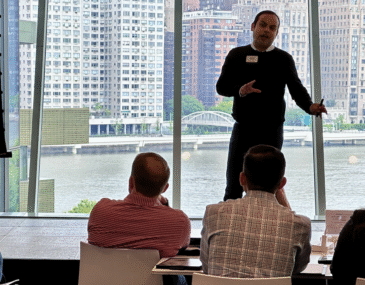
eCornell online Workshops are live, interactive 3-hour learning experiences led by Cornell faculty experts. These premium short-format sessions focus on AI topics and are designed for busy professionals who want to gain immediately applicable skills and strategic perspectives. Workshops include faculty presentations, breakout discussions, guided hands-on practice, and downloadable resources.

The AI Workshops All-Access Pass provides you with unlimited participation for 6 months from your date of purchase. Whether you choose to attend one workshop per month or several per week, the All-Access Pass will allow you to customize your AI journey and stay on top of the latest AI trends.

Hosted by Cornell faculty at the forefront of their fields, Workshops cover a range of cutting-edge AI topics applicable across industries. Whether you are just getting started with AI, seeking to build your AI skillset, or exploring advanced applications of AI, Workshops will provide you with an action-oriented learning experience for immediate application in your career. Sample Workshops include:

  • Work Smarter With AI Agents: Individual and Team Effectiveness
  • Leading AI Transformation: Bigger Than You Imagine, Harder Than You Expect
  • Using AI at Work: Practical Choices and Better Results
  • Search and Discoverability in the Era of AI
  • Don’t Just Prompt AI – Govern It
  • AI-Powered Product Manager
  • Leverage AI and Human Connection To Lead Through Uncertainty

How It Works

I like to think outside of the box, and this program from eCornell helped me conceptualize how I want to approach data problems going forward. I was able to actually apply new course concepts to my work, rather than simply repeat steps with different values.
‐ Mark T.
Mark T.
  • Aspiring data scientists and data analysts interested in public policy and social impact
  • Policy analysts and public sector professionals who use data to inform decisions and evaluate outcomes
  • Program evaluators, researchers, and social scientists seeking to strengthen their data analysis skills
  • City, regional, and community planners who rely on data to guide planning and policy decisions
  • Business and financial analysts interested in applying data science techniques to public policy and social challenges

Request Information Now by completing the form below.

Act today—courses are filling fast.