Course list

Symposium sessions feature two days of live, highly interactive virtual Zoom sessions that will explore today's most pressing topics. The Leadership Symposium offers you a unique opportunity to engage in real-time conversations with peers and experts from the Cornell community and beyond. Using the context of your own experiences, you will take part in reflections and small-group discussions to build on the skills and knowledge you have gained from your courses.

Join us for the next Symposium in which we'll discuss the ways that leaders across industries have continued engaging their teams over the past two years while pivoting in strategic ways. You will support your coursework by applying your knowledge and experiences to relevant topics for leaders. Throughout this Symposium, you will examine different areas of leadership, including the psychology of leadership; women in leadership; and leading in a volatile, uncertain, complex, and ambiguous world. By participating in relevant and engaging discussions, you will discover a variety of perspectives and build connections with your fellow participants from various industries.

All sessions are held on Zoom.

Future dates are subject to change. You may participate in as many sessions as you wish. Attending Symposium sessions is not required to successfully complete any certificate program. Once enrolled in your courses, you will receive information about upcoming events. Accessibility accommodations will be available upon request. For future reference, download our Symposium course flyer.

Symposium sessions feature three days of live, highly interactive virtual Zoom sessions that will explore today's most pressing topics. The Hospitality Symposium offers you a unique opportunity to engage in real-time conversations with peers and experts from the Cornell community and beyond. Using the context of your own experiences, you will take part in reflections and small-group discussions to build on the skills and knowledge you have gained from your courses.

Join us for the next Symposium, in which we'll discuss how both day-to-day operations and strategic goal setting in the hospitality sector have rapidly evolved over the past two years, opening up new space for real-time conversations about the future of the industry. You will support your coursework by applying your knowledge and experiences to various areas of the industry, examining the innovations and accommodations you have all had to make throughout the COVID-19 pandemic and strategizing on future directions. By participating in relevant and engaging discussions, you will discover a variety of perspectives and build connections with your fellow participants from across the industry.

All sessions are held on Zoom.

Future dates are subject to change. You may participate in as many sessions as you wish. Attending Symposium sessions is not required to successfully complete any certificate program. Once enrolled in your courses, you will receive information about upcoming events. Accessibility accommodations will be available upon request.

eCornell Online Workshops are live, interactive 3-hour learning experiences led by Cornell faculty experts. These premium short-format sessions focus on AI topics and are designed for busy professionals who want to gain immediately applicable skills and strategic perspectives. Workshops include faculty presentations, breakout discussions, and guided hands-on practice.
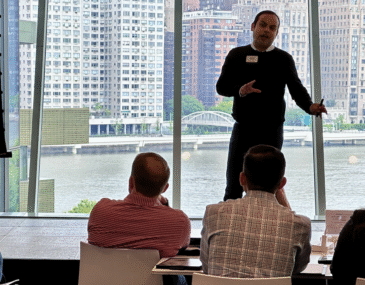
The AI Workshops All-Access Pass provides you with unlimited participation for 6 months from your date of purchase. Whether you choose to attend one workshop per month, or several per week, the All-Access Pass will allow you to customize your AI journey and stay on top of the latest AI trends.

Workshops cover a range of cutting-edge AI topics applicable across industries, hosted by Cornell faculty at the forefront of their fields. Whether you are just getting started with AI, seeking to build your AI skillset, or exploring advanced applications of AI, Workshops will provide you with an action-oriented learning experience for immediate application in your career. Sample Workshops include:

  • Work Smarter with AI Agents: Individual and Team Effectiveness
  • Leading AI Transformation: Bigger Than You Imagine, Harder Than You Expect
  • Using AI at Work: Practical Choices and Better Results
  • Search & Discoverability in the Era of AI
  • Don't Just Prompt AI - Govern it
  • AI-Powered Product Manager
  • Leverage AI and Human Connection to Lead through Uncertainty

Telemedicine has emerged as a powerful tool in healthcare. During the COVID-19 pandemic, many clinicians and their patients were forced to explore and implement alternative and innovative forms of medical treatment. For many patients, telemedicine was their only link to care. But unlike in-person visits, it only takes a few seconds for a virtual visit to go poorly, exposing you and your institution to risk.

This foundational course, authored by expert clinicians at Weill Cornell Medicine, offers you the chance to examine how to lead successful telemedicine encounters with your patients in a virtual space. More specifically, you will look at how to stage your telemedicine appointments effectively with patients. You will also explore how you can communicate effectively — both verbally and nonverbally — with patients in this arena.

Given the many technical challenges inherent in conducting an effective telemedicine visit, you will examine techniques and tips to help you better prepare for your patients, creating a personal action plan to help you troubleshoot and overcome technical difficulties. In addition, you will investigate how to perform a basic physical exam virtually and have an opportunity to practice it with peers. Finally, you will study how to modify your medical decision-making process in the virtual space. All of the course materials are designed to help you adapt your in-person clinical skills to a virtual environment and ultimately form strong connections with your patients.

The materials in this course correspond to the Association of American Medical Colleges (AAMC) Telehealth Competencies established in 2020.

  • Apr 22, 2026
  • Jul 15, 2026
  • Oct 7, 2026
  • Dec 30, 2026
  • Mar 24, 2027
  • Jun 16, 2027

For people all over the world, in-person interaction has been the medium through which personal and professional communication has traditionally taken place. The COVID-19 pandemic has altered this norm and made it clear that effective virtual communication is a skill that not only business professionals need to master, but also schoolteachers, medical professionals, students — essentially, anyone hoping to make connections within the virtual space.

In this course, you will learn to communicate effectively in a virtual environment and address the complexities inherent in online communication that are largely absent from face-to-face communication. You will learn how to create and adapt to virtual interactions, which includes activities such as setting up your physical space, adjusting your camera, and focusing on intonation and gestures. Finally, you will plan and prepare a high-stakes virtual presentation or communication by putting what you've learned into practice.

  • Jun 3, 2026
  • Aug 26, 2026
  • Nov 18, 2026
  • Feb 10, 2027
  • May 5, 2027

In this course, you will identify the responsibilities of a service champion and the personal characteristics that contribute to effectiveness. The key skills required to assess, guide, and motivate service employees' performance are presented. You will practice the competencies required for engaging your colleagues in creating a strong service culture. Self-assessments and tools provide you with direction in developing several of these skills to evaluate your leadership traits, such as your credibility and expression of empathy. A review of communication channels and characteristics enables you to select the most appropriate method of communicating service standards. A final project provides an opportunity for you to apply course concepts to your own organization to facilitate a strong service culture.

What's a “service champion”? What do we mean by a “strong service culture”? In this course, you will identify what great customer service teams do so that you can practice and model the same skills, helping your team move from good to great.

Throughout this course you will practice modeling empathy, communication, curious discovery, and empowering others. This practice will give you the ability to empower others and empower your team to deliver excellent service that can be sustained over time.

  • Jun 24, 2026
  • Sep 2, 2026
  • Nov 11, 2026
In this course, you will focus on the key organizational processes that support the development of a strong service culture and exceptional customer service. You will be provided with a number of tools that enable you to select employees who have a strong service orientation and who will be a good fit with organizational values. The processes of orientation and socialization are examined as two powerful means of communicating service standards. You will then examine the benefits of a team-centered, collaborative culture and discuss strategies to facilitate and reward team performance. You will discuss organizational citizenship behavior using specific practices that support continuous on-the-job “training that sticks.” You will wrap up the course by designing an orientation program for new service employees that takes into consideration service-focused principles and practices.
  • May 13, 2026
  • Jul 22, 2026
  • Sep 30, 2026
  • Dec 9, 2026
Understanding why people do what they do is the foundation of all influence. When you are inaccurate in doing this, your attempt to influence others will have random and unpredictable effects. But people are complex, and as a leader, you don't have the time or resources to decipher everyone's psyche. The key is to know when and how to tailor your approach to understanding others in different kinds of interactions.

In this course, you will learn how to become more accurate in attributing causes to behavior in limited interactions, as well as how to increase your ability to get at the heart of a problem when you have the time and resources to do so. Professor Filipowicz will also teach you how to use a set of tools that can help you understand other people with efficiency, accuracy, and impact.
  • Apr 22, 2026
  • May 20, 2026
  • Jun 3, 2026
  • Jun 17, 2026
  • Jul 1, 2026
  • Jul 15, 2026
  • Jul 29, 2026

How can you ensure your organization is providing a service that meets the expectations of both patients and guests? Are there ways your organization could improve customer satisfaction while reducing costs?

In this course, you'll explore how to measure quality and diagnose what's causing issues with quality in your organization. You'll also explore methods for improving processes while maintaining quality at your organization.

  • Apr 22, 2026
  • Jun 17, 2026
  • Aug 12, 2026
  • Oct 7, 2026
  • Dec 2, 2026
  • Jan 27, 2027
  • Mar 24, 2027

Success does not just happen. Successful leaders figure out what matters most to their success and go out and make it happen. This has never been an easy process, but in today's world it has become even more difficult: The volatile, uncertain, complex, and ambiguous (VUCA) environments that confront organizations today require a new breed of leaders. To lead and succeed in a VUCA world, leaders must now be adept at building consensus and influencing people who are outside their direct control but whose cooperation is essential to the success of their efforts.

In this course, you will develop a checklist to help you determine the most important elements required to execute your vision and strategy. You will establish a sphere of influence that can provide external support and determine the most important elements required to accomplish your vision and strategy. Finally, you will prepare for unexpected challenges.

  • Apr 22, 2026
  • Jun 17, 2026
  • Aug 12, 2026
  • Oct 7, 2026
  • Dec 2, 2026
  • Jan 27, 2027
  • Mar 24, 2027

Managing people in a healthcare organization is all about effective communication and good leadership practices—both of which will allow you to create a top-notch team. In this course, Dr. Karpman will share his expertise in medicine and business and give you a framework  to evaluate yourself and the people you work with through the lens of your organization's mission, vision, and values. You'll also work to solve communication issues at both the organizational and individual levels.

In the five-part course project, Dr. Karpman will challenge you to define goals and values, plan for performance management, find efficiencies by planning better meetings, refine your mediation skills, and evaluate organizational communication. Dr. Karpman will also talk to you about the importance of promoting a culture of safety, and using time-tested teamwork and performance strategies to improve your organization.

  • May 20, 2026
  • Jul 15, 2026
  • Sep 9, 2026
  • Nov 4, 2026
  • Dec 30, 2026
  • Feb 24, 2027
  • Apr 21, 2027
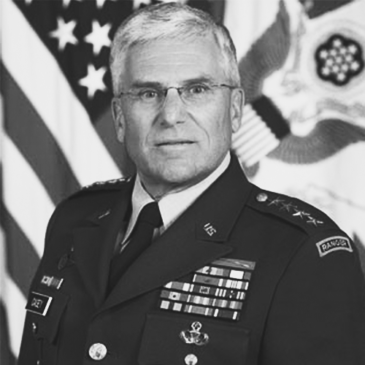
VUCA is an acronym that stands for “volatility, uncertainty, complexity, and ambiguity.” Learn from General George W. Casey, Jr. how leaders understand and counteract the impacts of the VUCA world to lead more effectively today. In this course, you will gain insights into how you can identify and reduce the impact of volatility, uncertainty, complexity, and ambiguity in your workplace, elevating your opportunity to succeed. You will match your strengths and weaknesses with the leadership characteristics essential in today's VUCA world to formulate an action plan to guide you in improving your leadership skills. Finally, you will develop skills to improve your vision, courage, and character, ultimately preparing you to lead in a VUCA world.
  • May 6, 2026
  • Jul 1, 2026
  • Aug 26, 2026
  • Oct 21, 2026
  • Dec 16, 2026
  • Feb 10, 2027
  • Apr 7, 2027

A crisis can have a tremendous impact on the people involved and on an organization's performance and reputation, so it's important to communicate effectively in order to minimize negative consequences. Preparing for a crisis through the creation and ongoing analysis of a crisis communication plan can help minimize negative reactions and fallout. In this course, you will define crisis, paracrisis, and the goals of crisis communication. You will share your own experiences and practice identifying potential crises, creating a crisis communication plan, choosing a crisis communication team, and evaluating the plan.

A key component of preparing for a crisis is crafting messages for internal and external stakeholders. Messages must be quick, consistent, and open, and preparing initial statements ahead of time will help leaders and spokespersons communicate effectively during a crisis. You will examine the content of effective initial statements with the opportunity to review real-life examples, evaluating them for quality and success. You will practice addressing difficult questions and criticisms, exploring acceptable and graceful responses.

Once the crisis is over, it's important to review what worked well, what didn't, and to update the crisis communication plan for next time. Reflecting on a real life example, you will evaluate the response to the crisis and the crisis communication plan itself.

  • May 6, 2026
  • Jun 3, 2026
  • Jul 1, 2026
  • Jul 29, 2026
  • Aug 26, 2026
  • Sep 23, 2026
  • Oct 21, 2026

How It Works

Frequently Asked Questions

Healthcare leaders are being asked to improve access, quality, and patient experience while care delivery models keep shifting. Cornell’s Adaptive Healthcare Strategy Certificate is built for that reality, helping you lead with agility across virtual care, service excellence, quality improvement, and healthcare leadership.

In this certificate program from the Cornell SC Johnson College of Business, you will strengthen how you communicate and make decisions in virtual environments, build a service-focused culture that improves the patient and visitor experience, and apply practical quality and process-improvement methods that support better outcomes and more reliable operations. You’ll practice through structured, real-world assignments that translate directly to your unit, clinic, or organization.

If you want stronger virtual-care execution, a practical playbook for service and quality improvement, and the confidence to lead teams through change, you should choose Cornell’s Adaptive Healthcare Strategy Certificate.

Most online programs lean heavily on self-study and generic quizzes. Cornell’s Adaptive Healthcare Strategy Certificate is designed to help you apply what you learn to real healthcare work, with an interactive, human-centered learning model that keeps you moving from concepts to execution.

You learn in a small cohort with an expert facilitator who guides discussions and provides feedback on your submitted work. The coursework blends concise faculty-designed content with structured practice, including scenario-based assignments in areas like virtual care communication, service culture, process improvement, and crisis-ready leadership. Many learners find that this combination creates accountability and makes the learning feel immediately usable on the job.

You also finish the Adaptive Healthcare Strategy Certificate program with a shareable Cornell University credential that signals you have built practical, current capabilities in leading adaptive healthcare strategy.

Plus, by enrolling in Cornell’s Adaptive Healthcare Strategy Certificate, you get two years of access to Leadership Symposium featuring two days of live, highly interactive virtual Zoom sessions that will explore today’s most pressing topics, giving you a unique opportunity to engage in real-time conversations with peers and experts from the Cornell community and beyond.

Enrolling in this certificate also provides you with a 6-month All-Access Pass to eCornell's live online AI Workshops, interactive sessions led by world-class Cornell faculty that combine Ivy League insight with practical applications for busy professionals. Each 3-hour Workshop features structured instruction, guided practice, and real tools to build competitive AI capabilities, plus the opportunity to connect with a global cohort of growth-oriented peers. While AI Workshops are not required, they enhance certificate programs through:

  • Integrating AI perspectives across most curricula
  • Responding to emerging AI developments and trends
  • Offering direct engagement with Cornell faculty at the forefront of AI research

Cornell’s Adaptive Healthcare Strategy Certificate is designed for healthcare professionals and healthcare-adjacent leaders who need to improve care delivery and operations in fast-changing conditions.

You are a strong fit if you:

  • Support or lead patient care delivery and want stronger virtual care and communication practices
  • Influence the patient or visitor experience and want to build a more consistent service culture
  • Work on healthcare operations, quality, or performance improvement and want practical methods to measure, diagnose, and improve processes
  • Manage cross-disciplinary teams and want stronger tools for meetings, performance conversations, conflict resolution, and crisis-ready communication

Cornell’s Adaptive Healthcare Strategy Certificate is relevant across many healthcare settings, including clinical teams, administrative and patient services, care management, and organizational leadership roles.

The work you submit in Cornell’s Adaptive Healthcare Strategy Certificate is designed to look like real healthcare improvement and leadership work. You will build practical deliverables you can adapt to your setting, such as process changes, communication plans, and improvement roadmaps.

Examples of projects learners have completed include:

  • Redesigning a hospital cafeteria checkout process by adding capacity, assigning staff to assist self-checkout, and using clear communication to reduce lines, frustration, and lost sales
  • Reducing incorrect anticoagulation referrals at hospital discharge by building EHR safeguards, creating an urgent referral work queue, and standardizing accountability for post-discharge management
  • Improving the reliability of clinical quality dashboards by standardizing data validation, strengthening handoffs between technical teams, and launching a real-time status tracker for stakeholders
  • Streamlining a high-volume hiring event by removing non-value-added check-in steps, balancing interview scheduling to cut wait time, and redesigning event flow to reduce unnecessary movement
  • Shortening lab result delays and reducing patient anxiety by implementing automated status notifications, setting clear communication timelines, and integrating results delivery through a patient portal

Throughout Cornell’s Adaptive Healthcare Strategy Certificate, projects like these help you connect strategy to execution, so you leave with work products that support measurable improvements in care delivery, experience, and operations.

Cornell’s Adaptive Healthcare Strategy Certificate helps you become the person your organization can rely on to improve care delivery, patient experience, and operations in changing conditions.

After completing the Adaptive Healthcare Strategy Certificate, you will be prepared to:

  • Identify how to modify your processes in the virtual space
  • Develop service-focused competencies to orient and engage teams in creating a strong service culture
  • Analyze relevant goals, data, and feedback to improve quality at your organization
  • Prepare to face challenges in your organization, from daily occurrences to unforeseen crises

Students often report long-term benefits that show up as stronger day-to-day leadership and greater confidence in complex environments. In post-program feedback, learners highlight practical tools they can implement immediately in areas like virtual care delivery, service excellence, and healthcare operations, along with frameworks that help them clarify priorities, anticipate external pressures, and create actionable plans that improve alignment, communication, and decision making across teams.

What truly sets eCornell apart is how our programs unlock genuine career transformation. Learners earn promotions to senior positions, enjoy meaningful salary growth, build valuable professional networks, and navigate successful career transitions.

Cornell’s Adaptive Healthcare Strategy Certificate, which consists of 4 elective courses, is designed to be completed in 2 months. Each course runs for 2 weeks, with a typical time commitment of 3 to 5 hours per week.

Busy healthcare schedules are exactly why the Adaptive Healthcare Strategy Certificate is built around structured online courses with predictable weekly effort. Most of the work is asynchronous so you can log in when it works for you, while interactive elements like facilitator-led discussions and opportunities for live sessions add support and accountability without requiring a daily fixed meeting time.

If you need to accelerate, many learners choose to focus more time in a given week. The consistent course rhythm and clear deadlines help you keep momentum without having to rearrange your clinical or operational responsibilities.

Students in Cornell’s Adaptive Healthcare Strategy Certificate often describe the experience as immediately useful for leading through change in healthcare. They highlight practical frameworks they can apply right away in areas like virtual care, operations, and patient experience. Learners also say the program helps them step back from day-to-day demands to clarify priorities, anticipate external pressures, and build actionable plans that strengthen alignment and decision making across teams.

Common themes include:

  • Practical tools for leading strategy and execution in complex healthcare environments
  • Clear guidance on virtual care and patient communication in digital settings
  • Real-world projects that result in usable, organization-specific plans
  • A strong focus on service culture and improving the patient experience
  • A flexible, well-structured format designed for working professionals
  • Engaged facilitators and resources that continue to add value after the program

Telehealth can expand access, but small mistakes in setup, communication, or contingency planning can quickly erode trust and introduce risk. Cornell’s Adaptive Healthcare Strategy Certificate helps you translate in-person clinical presence into a reliable virtual encounter by focusing on what changes in the virtual environment and what must stay consistent with your standard of care.

You will practice how to stage your on-camera environment, strengthen verbal and nonverbal communication, plan for technical failures, and guide patients through a basic virtual physical exam with clear scripting. You’ll also learn to adapt clinical decision making for the virtual space, including risk stratification and thorough discharge planning, so you can make better judgments with limited inputs.

At the end of Cornell’s Adaptive Healthcare Strategy Certificate program, you leave with concrete checklists and a personal action plan you can apply to your next video visit.

Patient experience is shaped by what your team does consistently, not only by individual intent. Cornell’s Adaptive Healthcare Strategy Certificate equips you to lead service excellence as an operational discipline by building the behaviors, hiring and onboarding practices, and communication choices that reinforce a strong service culture.

You will assess your service leadership competencies; practice skills like empathy, credibility, and assertive communication; and learn how to choose communication channels that make service standards more likely to be understood and followed. You’ll also work on organizational processes that support excellent customer experience, including selecting service-centered employees, designing orientation and socialization that communicates values, fostering collaboration, and determining when training is the right intervention versus when the root cause is motivation, resources, or systems.

The result is a clear set of actions you can use to align leaders and frontline teams around service expectations that patients and visitors actually feel.

When quality problems persist, you need a repeatable way to define the issue, find root causes, and monitor whether changes are working. Cornell’s Adaptive Healthcare Strategy Certificate introduces practical quality and process-improvement tools you can use in hospitals, clinics, senior living, or other healthcare services.

You will learn how to measure and interpret quality using common service-quality and customer-focused metrics, then diagnose what is driving gaps using structured methods. Practice throughout Cornell’s Adaptive Healthcare Strategy Certificate includes tools for organizing ideas, mapping causes, and analyzing variation over time. You’ll also explore Lean principles to identify waste and improve flow while protecting service quality.

These methods help you move from a general goal like “improve patient satisfaction” to a specific, testable improvement plan with data you can track and communicate across stakeholders.

Request Information Now by completing the form below.

Act today—courses are filling fast.