

Celia Bigoness is a Clinical Professor of Law and founder of the Entrepreneurship Law Clinic, Cornell’s first transactional law clinic. In addition to teaching at the Entrepreneurship Law Clinic, Professor Bigoness teaches “Introduction to Transactional Lawyering” and organizes the annual Cornell Law School Transactional Lawyering Competition. Before joining Cornell, she spent seven years practicing corporate law at Sullivan & Cromwell LLP in New York, London, and Paris. Her experience includes project finance, leveraged finance, capital markets, and mergers and acquisitions. Professor Bigoness received her J.D. from Yale Law School, where she was editor-in-chief of the Yale Journal of International Law, and her A.B. from Harvard.

International Business LawCornell Certificate Program
International Business Law (LAWC17ML)
Tell me more!Online
$3,750
Overview and Courses
Thinking of doing business globally? In this certificate program, you will discover how to identify and address some of the key legal issues that can arise during international transactions.
Whether you have multinational operations, joint ventures or investments with foreign partners, or are simply purchasing and selling goods or services across borders, it is critical to gain an understanding of the intricate legal landscape of cross-border transactions. You will begin with an overview of the legal issues relevant to both public law and private law then explore practical solutions for dealing with these issues.
By the program's conclusion, you will have developed practical insights and the ability to identify specific legal risks that commonly arise in global business transactions. You’ll also be equipped to propose effective solutions to these issues to operate effectively within national and international legal structures.
You will have six months to complete the required elements for this certificate program, but this flexible approach allows you to finish sooner based on your schedule.
This program includes two years of free access to the Leadership Symposium!
These highly interactive virtual events span multiple days and explore today’s most pressing topics. Symposium offers exclusive opportunities to engage in real-time discussions with your eCornell community, applying insights from your courses to real-world scenarios. Through reflections and small-group discussions, you will deepen your learning, broaden your perspective, and expand your professional network.
Symposium events are held throughout the year, providing ongoing opportunities to stay engaged, gain fresh perspectives, and strengthen your skills. Once enrolled, you will receive access to the Symposium networking site as well as details about upcoming sessions. You can participate in as many as you’d like to make the most of your experience, though attendance is not required to complete your program.
Whether you currently manage or are planning to develop a foreign direct investment (FDI), understanding risks is critical when doing business in a foreign jurisdiction. Cross-border investments can be jeopardized by a change in the political culture or the legal landscape of the country in which your investment is located. What happens, for example, if the host country enacts new laws or regulations that raise your operating costs? Or what happens in the event of expropriation? With so many variables to account for, you will need practical insights and comprehensive tools to help mitigate uncertainty.
In this course, you will examine several contractual clauses and other resources that will help you anticipate and respond to problems that can negatively impact the return on your FDI. You’ll also explore a real-world example of a cross-border deal gone wrong, learning from challenges to develop effective strategies and protections. By practicing how to identify different risks, you’ll discover how to recommend contractual mechanisms to offset their effects.
If your business has any international activities, it is important to equip yourself with the knowledge to navigate the global business landscape. Familiarizing yourself with the complexities of the federal Foreign Corrupt Practices Act (FCPA) can help you to avoid running afoul of its requirements and operate confidentially and ethically. Many businesses are subject to the FCPA, yet the statute can be difficult to understand due to its complexity and sheer breadth.
In this course, you will examine the FCPA’s origins, scope, and applicability under different circumstances. You’ll analyze various scenarios in which the FCPA’s requirements are implicated, and you’ll define and evaluate best practices for ensuring compliance with the FCPA. Finally, you’ll have the opportunity to step back and consider the broader implications of the FCPA for U.S. businesses seeking to compete internationally.
Whether your business exports globally or imports into the United States, understanding the economic impact of trade tariffs is crucial. Trade tariffs are a tax on products that enter a country’s national borders, and they are imposed to varying degrees by most countries around the world. Just as with any other tax on business activities, a business can change the scope and magnitude of any tariffs it is required to pay by altering its sales or procurement practices.
This course will provide the tools needed to assess the economic impact of U.S. tariff laws on any prospective import by a U.S. business. You will discover how to assess and compare tariffs, empowering you to minimize financial impact while achieving other business objectives. You’ll also examine the legal limits of tariff engineering — a common method for tariff reduction — and gain valuable insights into how U.S. tariff laws align with historical global practices.
Virtually every company, regardless of its size or industry, owns a form of intellectual property known as trade secrets. Although protected under U.S. federal and state laws, trade secrets do not benefit from similar protections in many foreign jurisdictions. Accordingly, a U.S. company that seeks to do business abroad or contract with foreign partners may be exposing its trade secrets to new vulnerabilities as a result.
In this course, you will analyze how U.S. laws protect trade secrets then examine common ways in which foreign laws on trade secrets differ from the United States. You’ll also identify best practices and procedures for protecting trade secrets outside of the United States, including through contractual mechanisms. By the end of this course, you’ll gain insights into the cultural implications of various legal approaches and fortify your knowledge to protect intellectual assets.
Symposium sessions feature two days of live, highly interactive virtual Zoom sessions that will explore today’s most pressing topics. The Leadership Symposium offers you a unique opportunity to engage in real-time conversations with peers and experts from the Cornell community and beyond. Using the context of your own experiences, you will take part in reflections and small-group discussions to build on the skills and knowledge you have gained from your courses.
Join us for the next Symposium, in which we will share experiences from across industries, inspiring real-time conversations about best practices, and innovation. You will support your coursework by applying your knowledge and experiences to some of the most pressing topics and trends in leadership. By participating in relevant and engaging discussions, you’ll discover a variety of perspectives and build connections with your fellow participants.
All sessions are held on Zoom.
Future dates are subject to change. You may participate in as many sessions as you wish. Attending Symposium sessions is not required to successfully complete any certificate program. Once enrolled in your courses, you will receive information about upcoming events. Accessibility accommodations will be available upon request.
eCornell online Workshops are live, interactive learning experiences lasting 1 to 4 hours and led by Cornell faculty experts. These premium, short-format sessions focus on AI topics and are designed for busy professionals who want to gain immediately applicable skills and strategic perspectives. Workshops may include faculty presentations, breakout discussions, and guided hands-on practice.
The AI Workshops All-Access Pass provides you with unlimited participation for 6 months from your date of purchase. Whether you choose to attend one Workshop per month or several per week, the All-Access Pass allows you to customize your AI journey and stay on top of the latest AI trends.
Hosted by Cornell faculty at the forefront of their fields, Workshops cover a range of cutting-edge AI topics applicable across industries. Workshops are offered at three levels to allow you to choose topics that match your experience.
- AI Foundations
- These Workshops introduce core AI concepts, terminology, capabilities, limitations, and practical applications. No prior AI experience is required.
- Best for: Beginners, AI-curious professionals, and teams starting their AI journey.
- AI in Practice
- These Workshops focus on practical skills, workflows, and strategies that help participants use AI more effectively in their day-to-day work. Some familiarity with AI tools is recommended.
- Best for: Professionals who have experimented with AI and want to build confidence and capability.
- AI Leadership and Transformation
- These advanced Workshops explore emerging technologies, strategic implementation, governance, organizational impact, and specialized applications. AI fluency is expected, and some Workshops may have prerequisites.
- Best for: AI leaders, transformation teams, executives, and advanced practitioners.
How It Works
Time Commitment
40 hours with 6 months of access at your own pace
Engagement
100% self-paced
Power Your Career
Gain today’s most in-demand skills to stand apart.
Flexibility Fits Your Life
Learn on your schedule without stepping out of your job.
Personalized Facilitation
Receive expert feedback and guidance.
Real-world Projects
Apply learning and insights to your work to make an impact right away.
Learn From Top Minds
Courses are developed by Cornell faculty.
Time Commitment
40 hours with 6 months of access at your own pace
Engagement
100% self-paced
Power Your Career
Gain today’s most in-demand skills to stand apart.
Flexibility Fits Your Life
Learn on your schedule without stepping out of your job.
Personalized Facilitation
Receive expert feedback and guidance.
Real-world Projects
Apply learning and insights to your work to make an impact right away.
Learn From Top Minds
Courses are developed by Cornell faculty.
Faculty Author
Key Course Takeaways
- Anticipate and mitigate the unique risks to your business that can arise when operating in a foreign country
- Conduct international business competitively within the limitations of the Foreign Corrupt Practices Act
- Develop strategies to minimize the effects of tariffs on imports and exports while remaining compliant with U.S. tariff laws
- Identify how trade secrets become vulnerable when a company is doing business in a foreign jurisdiction
- Develop tools for protecting proprietary information to the greatest extent while also allowing your business to pursue international opportunities
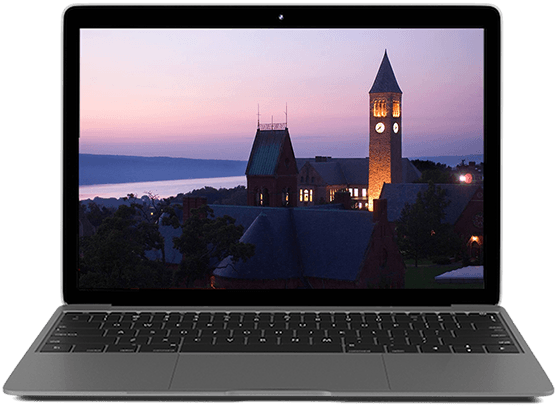

JOIN A LEADERSHIP SYMPOSIUM!
Leading Through Growth and Motivation
LIVE
November 3, 2026 through Wednesday, November 4, 2026 from 11-1:00 PM ET
What You'll Earn
- International Business Law Certificate from Cornell Law School
- 40 Professional Development Hours (4 CEUs)
Watch the Video
Hear eCornell students share their stories.
Who Should Enroll
- Business professionals managing international operations, partnerships, or investments
- Import/export, supply chain, and procurement professionals working across borders
- Legal, compliance, and risk management professionals supporting global business activities
- Entrepreneurs and business owners expanding into international markets
- Professionals seeking practical knowledge of tariffs, FCPA compliance, and trade secret protection in global commerce
Explore Related Programs










“I would found an institution where any person could find instruction in any study.”
{Anytime, anywhere.}
{Anytime, anywhere.}
Ezra Cornell
Founder of Cornell UniversityExplore programs to meet your professional goals
Certificates

Earn a Cornell credential as you complete multiple courses.
- 2 to 6 months
- $2,000 to $10,000
- Online
Courses

Learn in a small cohort, with graded assignments and opportunities for live sessions.
- 2 to 4 weeks
- $299 to $1,199
- Online
Workshops

Develop AI skills and strategies in interactive sessions with Cornell faculty.
- 3 hours
- $449
- Online
Degrees

Earn a professional master’s degree from Cornell University.
- 15 to 24 months part-time
- Tuition varies
- Hybrid
On Campus

Join us in Ithaca or NYC to engage with peers and experts from around the world.
- 2 to 5 days
- $3,000 to $10,000
- In person - Ithaca or NYC
Programs for Teams
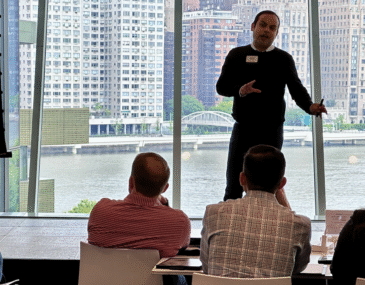
Address strategic challenges with Cornell University faculty to develop the skills required for organizational success.
- Custom Enterprise Programs
- Price varies
- In person or hybrid
Request Information Now by completing the form below.
Act today—courses are filling fast.
Purchase Options
3750

$3,750
International Business Law
| Select Payment Method | Cost |
|---|---|
| $3,750 |
Review Program Pricing and Details