

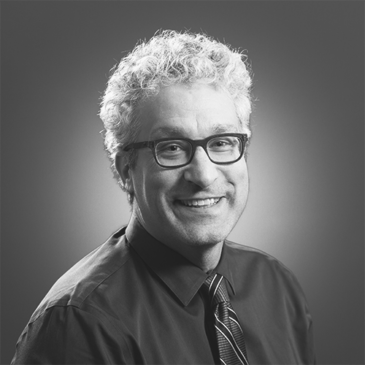
Brian Kirby is the Meinig Family Professor at Cornell University’s Sibley School of Mechanical and Aerospace Engineering. He is also Professor of Engineering in the Department of Hematology and Medical Oncology at Weill Cornell Medicine as well as the author of the book “How Cancer Works.” Before joining Cornell in 2004, Professor Kirby was a Senior Member of the Technical Staff in the Microfluidics Department at Sandia National Laboratories in Livermore, California.
Professor Kirby currently directs the Micro/Nanofluidics Laboratory in the Sibley School of Mechanical and Aerospace Engineering at Cornell University. He joined the Sibley School in August 2004. Previous to that, Professor Kirby was a Senior Member of the Technical Staff in the Microfluidics Department at Sandia National Laboratories in Livermore, California, where he worked from 2001 to 2004 on microfluidics systems, with applications primarily to counterbioterrorism.
Professor Kirby has received a 2002 R&D Top 100 Invention Award for work on microvalves for high-pressure fluid control, a 2004 J.D. Watson Investigator Award for microdevices for protein production and analysis, and a 2006 Presidential Early Career Award for Scientists and Engineers (PECASE) Award for nanoscale electrokinetics and bioagent detection. He has also received the 2008 Mr. and Mrs. Robert F. Tucker Excellence in Teaching Award, the 2013 and 2024 Robert ’55 and Vanne ’57 Cowie Excellence in Teaching Award, the 2015 and 2022 James M. and Marsha D. McCormick Excellence in Advising Award, the 2015 Cornell College of Engineering Research Excellence Award, and the 2025 Cornell Center for Teaching Innovation’s Creative Teaching Award.
Professor Kirby has chaired the Gordon Conference on Microfluidics (2011) and co-founded the Gordon Conference on Liquid Biopsy in Cancer (2014). He has taught in various capacities in the Sibley School of Mechanical and Aerospace Engineering at Cornell, the Mechanical Engineering Department at Stanford, and the Chemical Engineering Department at the University of Michigan. Professor Kirby has also authored a leading textbook on microscale and nanoscale fluid mechanics.